
What Is Body Recomposition? Understanding the Science.
Want to lose fat and gain muscle? You’re not alone. Men across the UK, USA and Europe ask the same question every year: how long does body recomposition take? There are no shortcuts. Real results need habits, consistency and patience. From my experience, steady effort always pays off. Body recomposition works, but it’s slower than crash dieting. The reward? Better health, a leaner shape and lasting results.
What Body Recomposition Really Means
According to a 2024 editorial in Frontiers in Nutrition, body recomposition is losing fat while keeping or gaining muscle. Scale weight may change little. Resistance training is essential. High protein intake supports results. Together, they ensure gradual, lasting fat loss and muscle gain.
What Is Body Recomposition?
Body recomposition is simple. You lose fat while building or protecting muscle. Shape improves even if scale barely changes. You look leaner, stronger, and more athletic. Clothes fit better. Posture improves. A 2020 review by Barakat et al. showed trained and untrained men can gain muscle and lose fat simultaneously. Recomposition isn’t just for beginners. The focus is reshaping your body, not chasing scale numbers.
How Long Does Body Recomposition Take?
Approximate Timeline Table
| Time Frame | What You Notice | Research Insight |
| 4 to 6 weeks | Strength increases gradually | Early changes reported consistently |
| 8 to 12 weeks | Visible muscle definition appears | Confirmed by multiple guides |
| 12 to 16 weeks | Clear body shape improvement | Realistic main window |
| 3 to 6 months | Major transformation occurs | Long-term success supported |
This timeline fits most healthy men who train consistently and eat well.
Why Results Differ Between Men?

Two men can follow the same plan but progress differently. This is normal. A 2025 review in Strength & Conditioning Journal shows body fat, training experience, diet, sleep and adherence affect recomposition speed. Men with higher fat often see faster early results. Lean, experienced lifters progress slower. Expectations must match biology and training history.
Protein, Diet and Fat Loss
Protein intake plays a major role in body recomposition. It supports muscle growth while protecting lean mass during fat loss.
A 2020 meta analysis published in Nutrition Reviews showed higher protein intake is linked to greater lean mass gains.
Another systematic review in the Journal of Cachexia, Sarcopenia and Muscle found that consuming at least 1.6 grams of protein per kilogram daily supports muscle growth during resistance training. For most men aiming for body recomposition, a range of 1.6 to 2.2 grams per kilogram works well. Protein should be spread across meals. Pair it with a small calorie deficit instead of extreme dieting. Crash diets increase muscle loss and slow progress.
Training That Supports Recomposition
Body recomposition needs resistance training. Cardio alone cannot build or preserve muscle. A 2025 systematic review in Sports Medicine analyzed 58 studies. It compared resistance training to no exercise in adults. Resistance training reduced body fat by 1.46%. Body fat mass decreased by 0.55 kg. It also improved lean muscle mass. This proves resistance training is essential for recomposition.
Problems, Causes and Solutions
| Problem | Why It Happens | Solution |
| Scale is not moving | Fat is lost and muscle is gained, so weight may stay same | Measure waist, take photos and track strength, not just weight |
| Progress feels slow | Visible changes take time, usually 12+ weeks | Stick to a plan for at least three months with consistent training |
| Body feels soft despite training | Not eating enough protein | Eat 1.6-2.2 g protein per kg body weight and lift weights |
| Only doing cardio | Strength training is missing, so muscle does not grow | Add 3-4 strength sessions per week with big compound exercises |
| Inconsistent adherence | Skipping workouts or poor diet slows results | Follow a structured plan, track meals and stay consistent |
How to Start Body Recomposition Today?
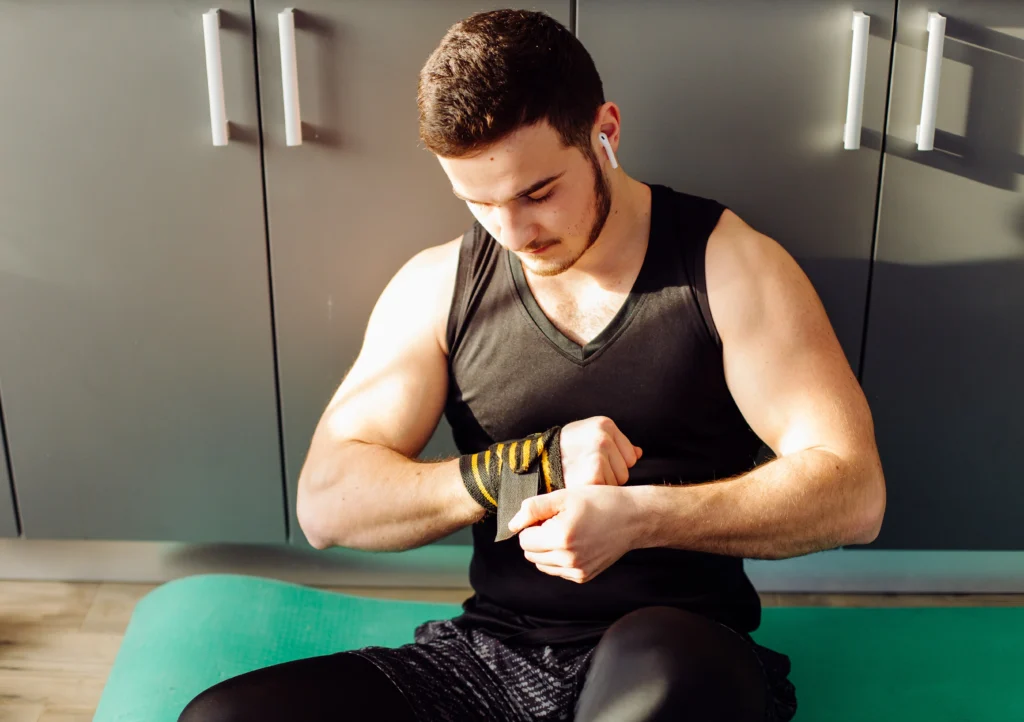
Start with simple, realistic steps. Experts recommend three to four strength sessions weekly, plus one or two cardio sessions. Each workout can stay under sixty minutes when focused on compound movements. A simple weekly structure works well. One day can include squats, bench presses and rows. Another day can focus on brisk walking or intervals. A third day can include deadlifts, overhead presses and pull-downs. Rest days matter as much as training days.
Eat mostly whole foods, hit daily protein targets and sleep at least seven hours nightly. Take front and side photos every four weeks to track real body recomposition changes.
Conclusion
So, how long does body recomposition take in reality? Most men see early changes within four to six weeks, noticeable changes by eight to twelve weeks and major transformations over three to six months when training, nutrition and sleep align. Science and experience agree that body recomposition moves slower than crash dieting but delivers far better long-term health and confidence. Stay consistent with strength training, high-protein eating and realistic expectations. Your body will change shape even if scale weight barely moves. Consult a professional to keep your body strong and mind active. Keep reading Men Health Magazine for trusted guidance on strength, fat loss, recovery and long-term performance.
FAQs
1. Is body recomposition supported by research?
Yes, strong research supports it. Multiple reviews confirm its effectiveness.
2. How much protein supports body recomposition?
Around 1.6 grams per kilogram works. Active men may need slightly more.
3. Is resistance training required?
Yes, resistance training is essential. Cardio alone is not enough.
4. Why do experts suggest 8-12 weeks?
Visible body changes need time. Most studies confirm this window.
5. Is body recomposition safe for men?
For healthy men, it is safe. Medical advice is recommended if unsure.
This Content is Updated on Date: December 23, 2025
Read More information with us:
1 What are Most Effective Workout: Click Here
2 Explore Good Running Workout: Click Here
References Link:
Body recomposition concept and timelines
- Frontiers in Nutrition – Editorial: New insights and advances in body recomposition (2024)
https://www.frontiersin.org/journals/nutrition/articles/10.3389/fnut.2024.1467406/full - PMC (NIH archive) – Editorial: New insights and advances in body recomposition
https://pmc.ncbi.nlm.nih.gov/articles/PMC11405322/
Body recomposition explainer and timelines (consumer‑oriented, 8-12 week / 3-6 month guidance)
- Naked Nutrition: How Long Does Body Recomposition Take?
https://nakednutrition.com/blogs/diets/how-long-does-body-recomposition-take - Gaspari Nutrition: How Long Does Body Recomposition Take? A Realistic Timeline
https://gasparinutrition.com/blogs/fitness-facts/how-long-does-body-recomposition-take-a-realistic-timeline - NYCTimes Lifestyle: How Long Does Body Recomposition Take? A Realistic Timeline
https://lifestyle.thenyctimes.com/story/165828/how-long-does-body-recomposition-take-a-realistic-timeline/
Science‑backed consumer guide on recomposition (fat loss without muscle loss)
- BodySpec: Losing Fat Without Losing Muscle: Science‑Backed Body Recomposition Guide
https://www.bodyspec.com/blog/post/losing_fat_without_losing_muscle_sciencebacked_body_recomposition_guide
General recomposition Q&A and evidence summary
- MacroFactor: Can You Lose Fat and Gain Muscle at the Same Time?
https://macrofactorapp.com/recomposition/
“Both trained and untrained can recompose” idea
- Review of recomposition strategies (simultaneous muscle gain and fat loss)
A Review of Strategies for Achieving Simultaneous Muscle Mass Gain and Fat Mass Loss – Journal of Education, Health and Sport (2025)
HTML: https://apcz.umk.pl/JEHS/article/view/59391
PDF: https://apcz.umk.pl/JEHS/article/download/59391/41809/179687
Protein intake and muscle gain
- Tagawa et al., Nutrition Reviews (2020): Dose-response relationship between protein intake and muscle mass increases in healthy adults
https://academic.oup.com/nutritionreviews/article/79/1/66/5936522 - Systematic review and meta‑analysis of protein intake to support muscle mass in younger and older adults – Journal of Cachexia, Sarcopenia and Muscle
https://onlinelibrary.wiley.com/doi/10.1002/jcsm.12922
Resistance training and body composition
- Effect of resistance training on body composition and physical fitness in adults (2025) – PMC
https://pmc.ncbi.nlm.nih.gov/articles/PMC12075210/ - Impact of resistance training intensity on body composition and physical fitness (2025) – PMC
https://pmc.ncbi.nlm.nih.gov/articles/PMC12162680/ - Functional and Combined Training Promote Body Recomposition and Performance (2024) – PMC
https://pmc.ncbi.nlm.nih.gov/articles/PMC11083855/
Practical recomposition / program‑style sources
- Transparent Labs: 8‑Week Body Recomposition Guide: Lose Fat & Gain Muscle
https://www.transparentlabs.com/blogs/all/body-recomposition-how-to-lose-fat-and-gain-muscle - BetterMe: Body Recomp Workout Plan: Gain Muscle and Lose Fat
https://betterme.world/articles/body-recomp-workout-plan/